The monitoring gap: candidates don’t start with Glassdoor anymore
Employer brand teams built their dashboards around human browsing behavior: candidates read Glassdoor, scan LinkedIn, maybe check Reddit, then decide whether to apply. That model is weakening.
Many candidates now begin with a question to an LLM: “What is it like to work at Company X?” or “Is Company X a good place for engineers?” The answer they receive is not a single review or a single post—it’s a synthesized narrative. That narrative can shape intent before a candidate ever visits your careers page.
Traditional monitoring still matters, but it no longer covers the full decision surface. If you only track what people say, you miss what AI concludes.
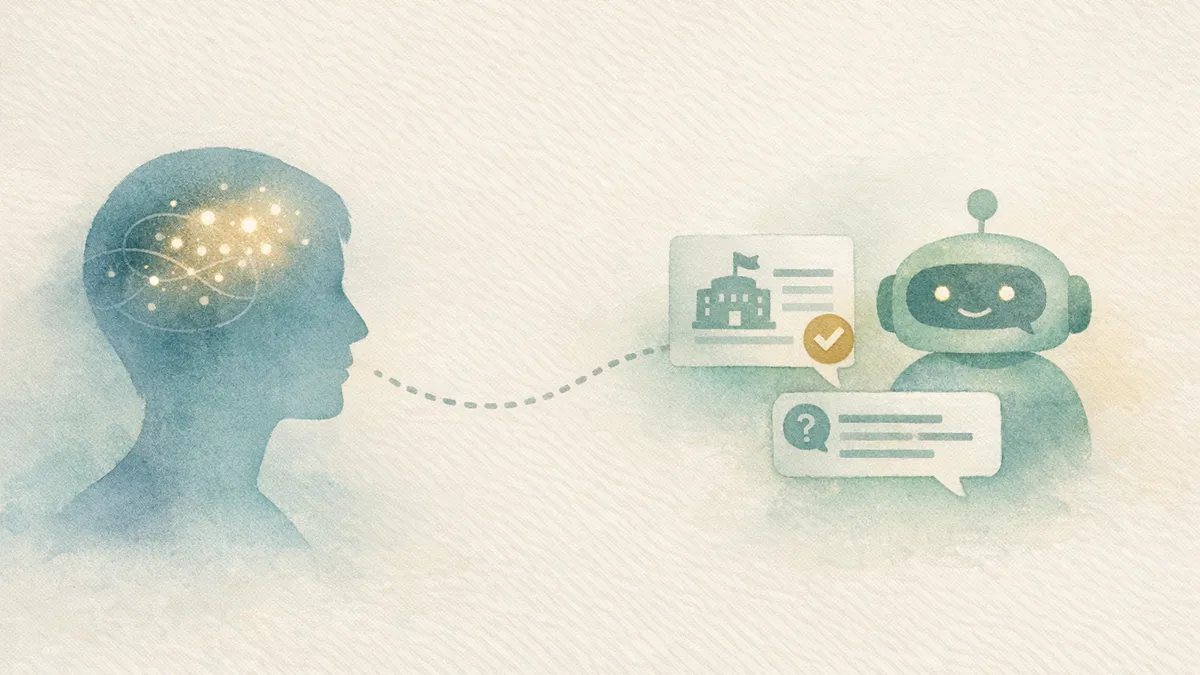
What changed: employer brand became AI‑mediated
LLMs act as intermediaries between your employer brand signals and candidate decisions. They compress multiple sources into a short explanation, often with confident language. This creates a new layer of risk and opportunity:
- Compression: nuanced tradeoffs become a few bullet points.
- Synthesis: disparate sources are merged into a single “story.”
- Prioritization: some signals are amplified while others are ignored.
- Recency and availability bias: what’s easiest to retrieve may outweigh what’s most accurate.
This is not just a new channel. It’s a new interpretation engine. The question is no longer only “What are people saying about us?” but also “What are AI systems telling people about us—and why?”
Why legacy employer brand monitoring falls short
Legacy monitoring is optimized for tracking mentions, sentiment, and ratings across known platforms. It assumes the candidate reads primary sources and forms their own view.
AI‑mediated perception breaks that assumption in several ways.
1) You’re not monitoring the output candidates actually consume
A reputation dashboard might flag a negative Reddit thread. But the candidate may never see it—only the chatbot’s summary of it.
Conversely, a single outdated blog post might be ignored by humans yet repeatedly surfaced by AI because it’s crawlable, quotable, and context-light.
2) Narrative drift is not the same as sentiment
Sentiment tracking can show “neutral-to-positive” while the AI narrative drifts into a damaging frame:
- “High-growth environment” becomes “burnout culture.”
- “Lean teams” becomes “understaffed.”
- “Strong ownership” becomes “lack of support.”
Drift can happen even without new negative content—through re-weighting of old sources, missing context, or overgeneralization.
3) You can’t fix what you can’t attribute
Classic monitoring tells you where a mention happened. AI answers often obscure provenance. Candidates rarely ask, “Which sources did you use?”—and many tools don’t show citations.
Without source attribution, HR teams struggle to:
- identify the specific content causing a claim,
- prioritize what to update,
- validate whether the claim is still true,
- measure whether corrections change the resulting narrative.
4) Employer brand is now cross‑domain by default
AI systems blend signals that employer brand teams historically treated separately:
- product reviews and customer complaints,
- leadership interviews and fundraising announcements,
- security incidents and layoffs coverage,
- employee posts, job ads, and compensation pages.
A candidate asking about “culture” may receive an answer shaped by non‑HR sources—because AI doesn’t respect org charts.
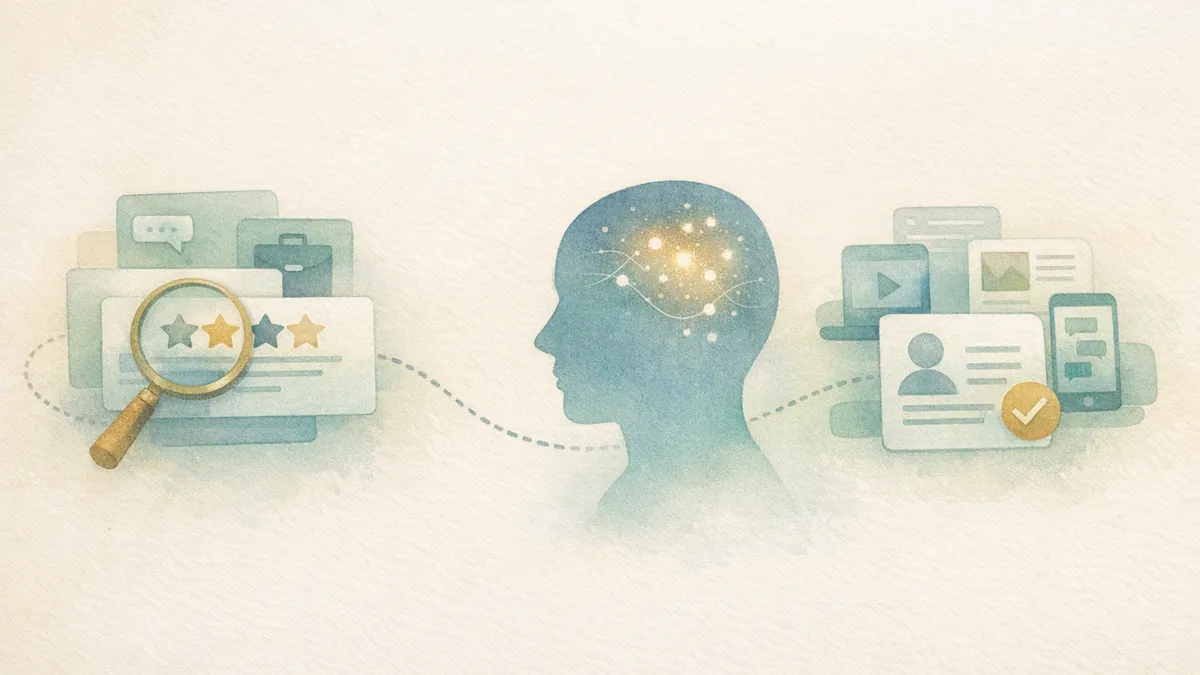
How AI chatbots build an employer narrative (and why it matters)
Different LLM experiences vary, but the pattern is consistent: an AI model produces a “best effort” summary using a mixture of learned patterns and retrieved information.
From an employer reputation standpoint, the key is that AI answers are often built from:
- Public review platforms: Glassdoor, Indeed, Blind (where accessible).
- Social and community content: Reddit, X, Hacker News, niche forums.
- Company-controlled pages: careers site, values pages, handbooks, blog posts.
- Third-party media: press, interviews, podcasts, layoff trackers.
- Job postings and compensation artifacts: role requirements, leveling language, benefits pages.
The model then maps these inputs into a small set of candidate-relevant claims: leadership quality, work-life balance, growth, stability, pay fairness, DEI, management style, and interview difficulty.
If those claims are wrong, incomplete, or outdated, the candidate’s first impression is wrong, incomplete, or outdated.
The new risk: “invisible” reputation damage
AI‑mediated reputation damage is often invisible to HR teams because it doesn’t show up as a spike in mentions.
Common patterns include:
- Outdated narratives: a past restructuring continues to dominate the “stability” story long after recovery.
- Single-source dominance: one viral post becomes the default reference for culture.
- Ambiguity filled with assumptions: missing information leads to generic but negative inferences (e.g., “limited growth,” “unclear progression”).
- Category errors: the company is compared to the wrong peer set, skewing expectations.
The practical impact is measurable: fewer qualified applicants, more drop-off after initial interest, and more “I heard…” objections during interviews.
What “monitoring” should mean now: from listening to intelligence
Modern employer brand monitoring needs to add a layer: AI reputation intelligence—systematically evaluating what AI systems say, which sources drive those outputs, and how to correct drift.
A useful program typically includes:
- Prompt coverage: a library of candidate questions (role-specific, geography-specific, seniority-specific).
- Output tracking: versioned snapshots of AI answers over time.
- Claim extraction: turning narrative into testable statements (e.g., “promotion cycles are slow”).
- Source mapping: identifying which URLs, documents, or recurring content patterns drive each claim.
- Correction strategy: updating, adding, or clarifying high-authority sources to reduce ambiguity.
This is where AI employer reputation intelligence platforms like Noopex AI fit: not replacing review monitoring, but making AI-mediated perception observable, attributable, and actionable.

How to correct narrative drift without “gaming” the system
Employer brand teams should avoid tactics that resemble manipulation. The goal is accuracy and completeness. In practice, corrections usually look like better documentation and clearer signals.
High-integrity interventions include:
- Publish verifiable specifics: leveling, progression expectations, interview stages, remote policy, manager training, and feedback cadence.
- Reduce ambiguity in job ads: remove inflated requirements, clarify scope, and align language across teams.
- Create durable, crawlable artifacts: updated FAQ pages, role guides, engineering blog posts, and leadership Q&A that address recurring candidate questions.
- Address known negatives directly: if workload is intense during certain cycles, explain why, how it’s managed, and what guardrails exist.
- Align internal and external truth: if employees experience mismatch, AI will eventually reflect that mismatch through public signals.
A practical rule: if a candidate asked for evidence, could you point to a stable page that supports the claim?
A simple operating model for HR and employer brand teams
To operationalize AI‑mediated reputation, treat it like a continuous quality process.
-
Define the narrative you can stand behind Document the core employer value proposition and the tradeoffs (credible brands acknowledge tradeoffs).
-
Measure AI outputs against that narrative Run recurring prompt audits across roles and locations. Track changes over time.
-
Investigate deltas, not just sentiment When AI answers shift, identify which claims changed and which sources likely drove the change.
-
Fix the source layer Update the pages, posts, and structured information that candidates and AI systems rely on.
-
Validate and iterate Re-test prompts and monitor whether the narrative stabilizes.
This approach complements Glassdoor monitoring rather than replacing it. Reviews remain an important signal; they’re just no longer the whole story.
The bottom line
Traditional employer brand monitoring was built for a world where candidates read primary sources. In a GPT-shaped world, candidates often read a synthesized narrative first. That makes employer reputation a problem of interpretation as much as visibility.
HR leaders who treat AI outputs as a measurable surface—grounded in sources, claims, and corrections—will be better positioned to protect candidate trust, reduce drop-off, and keep the employer narrative aligned with reality.