Why narrative drift is no longer a “PR problem”
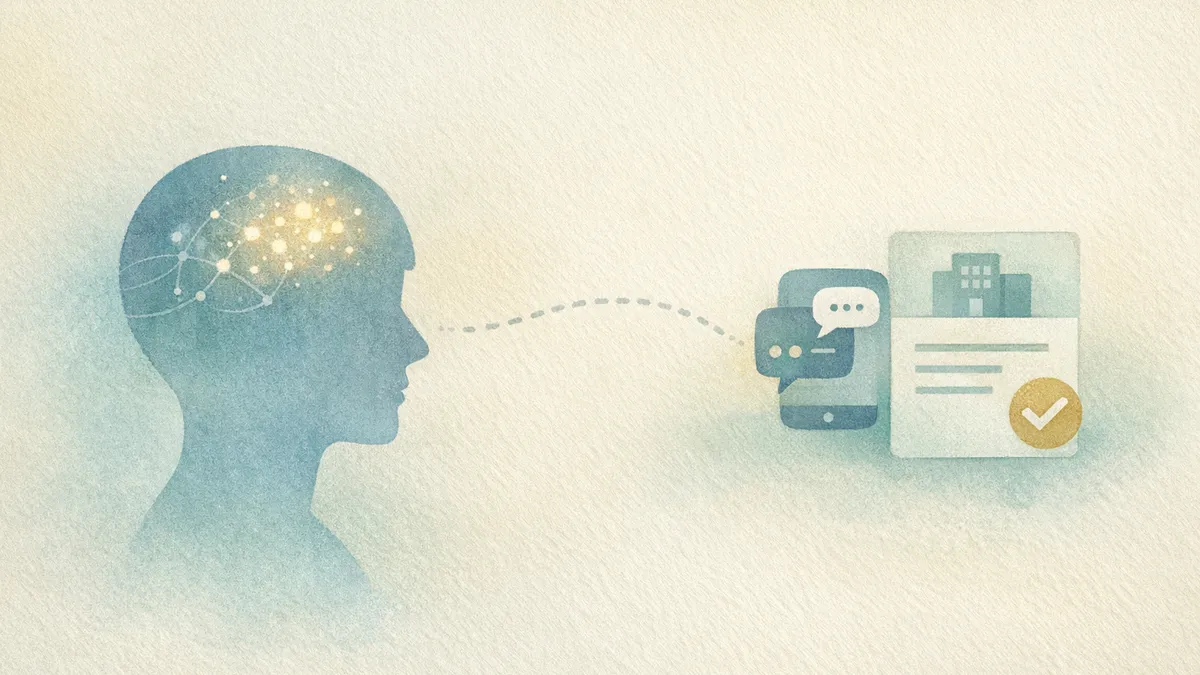
Leadership narratives used to travel through a small set of channels: press, earnings calls, keynote speeches, and a handful of influential articles. Today, candidates increasingly meet the company through AI: chatbots, search summaries, and recruiting assistants that synthesize what “the internet” says about you as an employer.
That shift changes the failure mode. A leadership story can remain coherent in executive communications while employer perception quietly moves in another direction. When that happens, hiring doesn’t just get harder—it gets less predictable.
Narrative drift is the measurable gap between:
- what leaders say the company is (mission, values, operating model), and
- what candidates believe it is (work experience, stability, fairness, growth).
In AI-mediated discovery, that gap becomes visible at the moment of intent: when a candidate asks an LLM, “What’s it like to work at X?”
The critical divergence: CEO perception vs employer perception
A common pattern is that CEO perception improves while employer perception deteriorates—or vice versa. These are related but distinct reputations.
- CEO perception: market-facing credibility, vision, decisiveness, media narrative, investor confidence.
- Employer perception: day-to-day reality signals—management quality, psychological safety, career paths, compensation fairness, workload, and trust.
When CEO perception diverges from employer perception, what happens to hiring is rarely linear. You may see strong inbound interest after a high-profile moment (funding, keynote, product launch), followed by:
- lower application-to-interview conversion,
- higher drop-off after recruiter screens,
- more “ghosting” after offer discussions,
- longer time-to-fill for roles that require trust (leadership, HR, finance, security), and
- increased compensation pressure to offset perceived risk.
The reason: the top of funnel is influenced by brand visibility, but late-stage intent is governed by perceived employment risk. AI summaries can amplify that risk if the sources they ingest are negative, outdated, or unbalanced.
How narrative drift forms in AI-mediated channels
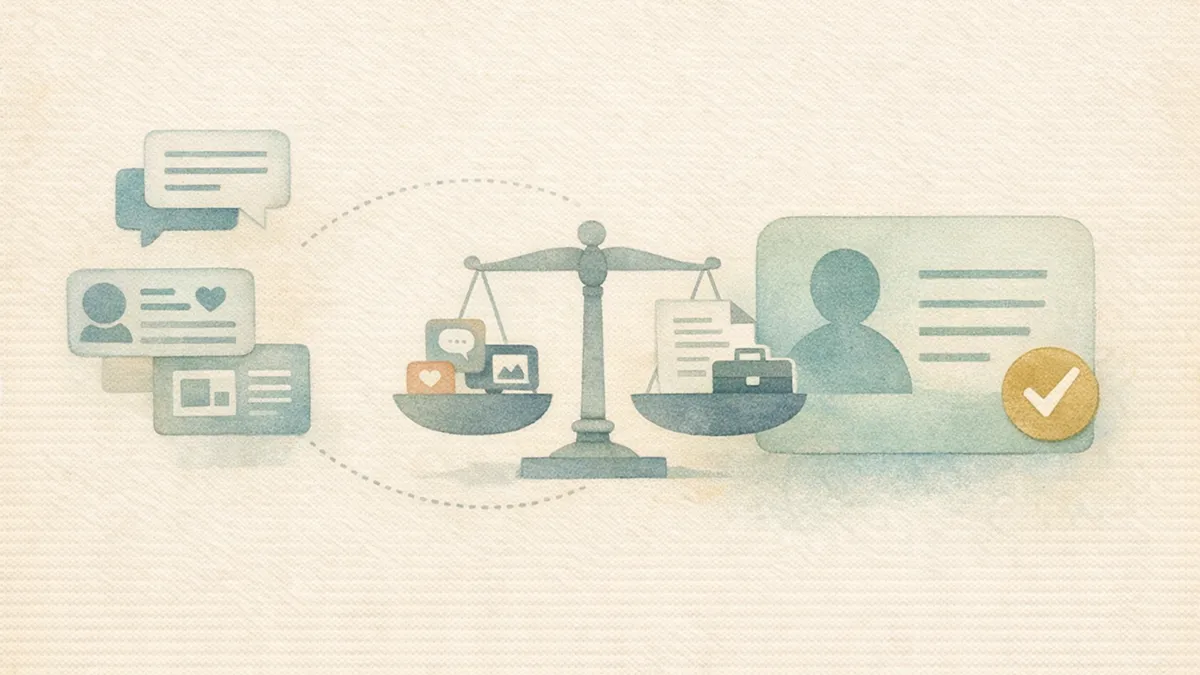
LLMs don’t “believe” your leadership narrative. They infer a narrative from patterns in their accessible sources. Drift forms when the source ecosystem changes faster than your internal story.
Common drivers include:
- Asymmetric content volume: a few negative review threads can outweigh a thin careers site.
- Recency effects: layoffs, reorganizations, or policy changes create fresh, high-salience signals.
- Ambiguity: vague values statements invite external interpretation.
- Third-party framing: media, Reddit, Blind, Glassdoor, and industry newsletters shape the “default” story.
- Internal inconsistency: leaders describe one operating model while employees describe another.
In practice, narrative drift is rarely caused by one “bad article.” It’s the cumulative effect of many small mismatches that become legible when an AI system summarizes them.
What changes when leadership narratives drift
Drift changes outcomes across the hiring system, not just brand sentiment.
1) Candidate intent becomes more fragile
Candidates use AI to pre-screen employers. If an AI assistant answers with uncertainty (“mixed reviews,” “reports of high turnover,” “recent layoffs”), intent weakens even when the role is attractive.
This fragility shows up as:
- fewer completed applications,
- more requests for compensation details early,
- more questions about stability, manager quality, and work-life boundaries.
2) Your EVP stops functioning as a decision tool
An EVP works when it reduces uncertainty: it tells candidates what to expect and helps them self-select. When external narratives contradict it, the EVP becomes “marketing,” not guidance.
Signals that your EVP has lost decision utility:
- candidates cite third-party narratives more than your own materials,
- interviewers spend time “correcting misconceptions,”
- recruiters feel forced to over-explain basic policies.
3) Recruiter time shifts from selection to reassurance
When the narrative is unstable, recruiters become interpreters, not matchmakers. That increases cycle time and reduces capacity. It also introduces inconsistency: different recruiters “explain” the company differently, which can further fragment perception.
4) Offer acceptance becomes a trust problem
Late-stage candidates are evaluating risk. If the leadership narrative says “high-performance culture” while AI summaries say “burnout” or “churn,” the candidate will discount leadership messaging.
Typical outcomes:
- more competing offers accepted,
- more negotiation anchored on risk premiums,
- more offer declines citing “fit” or “uncertainty” rather than role scope.
5) Internal alignment erodes
Drift is not only external. When employees see leadership narratives that don’t match lived experience, trust declines. That produces more negative external signals—reviews, posts, referrals that don’t convert—creating a feedback loop that AI systems can pick up.
The sources AI uses to build your employer narrative (and why that matters)
AI systems synthesize from whatever is available and salient. HR teams often underestimate how much “employer truth” is inferred from places they don’t manage.
High-impact source categories include:
- Employee review platforms (themes, not just star ratings)
- Layoff trackers and funding announcements (stability inference)
- Executive interviews and podcasts (culture claims)
- Job descriptions and career pages (role clarity, expectations)
- Community forums (manager quality, workload narratives)
- News coverage (ethics, litigation, regulatory risk)
The key is not to “control” these sources. It’s to understand how they weight together into a narrative that candidates and AI assistants will repeat.
This is where employer reputation intelligence becomes operational: mapping which sources drive which claims, and measuring how those claims change over time.
Detecting narrative drift: signals HR can measure
Most teams notice drift only after hiring metrics degrade. You can detect it earlier by tracking narrative consistency.
Practical indicators:
- Claim mismatch: your leadership narrative emphasizes growth and stability, while AI summaries emphasize restructuring or churn.
- Theme drift: recurring external themes (e.g., “politics,” “burnout,” “unclear direction”) not addressed in your owned content.
- Recency imbalance: the last 90 days of sources skew negative while your content cadence is quarterly.
- Role-specific drift: engineering perception differs sharply from sales or customer support.
A useful internal exercise is to compare three versions of your employer story:
- what leadership says,
- what recruiters say in screens,
- what AI assistants say when prompted.
When those three don’t match, you’re operating with hidden brand variance.
Correcting drift without spin: a sober playbook
Correcting narrative drift is not about “better messaging.” It’s about reducing uncertainty with evidence and consistency.
Step 1: Identify the dominant external claims
Start with what candidates are likely to hear from AI. Capture the top claims (positive, negative, ambiguous) and tag them by theme: stability, management, growth, fairness, workload, learning.
Step 2: Trace claims back to sources
For each claim, identify the source cluster driving it. One claim may be supported by reviews, a news article, and a forum thread. Another may be driven by a single viral post.
Step 3: Decide what is true, what is outdated, and what is wrong
This requires cross-functional input (HR, comms, legal, leadership). The goal is not defensiveness; it’s accuracy.
Use a simple decision grid:
- True and acceptable: reinforce with clear expectations.
- True and problematic: address operationally, then communicate changes.
- Outdated: publish updates with dates and specifics.
- Wrong: correct with verifiable facts and consistent repetition.
Step 4: Publish “proof,” not slogans
Candidates trust specifics. Replace abstract claims with concrete signals:
- manager training and expectations,
- promotion criteria and timelines,
- workload norms and boundaries,
- compensation philosophy,
- policy changes with effective dates.
Step 5: Create a cadence that matches AI recency
If your external narrative changes weekly, quarterly updates won’t keep up. Establish a lightweight cadence for employer-facing updates: short posts, role pages, culture notes, and Q&A that stay current.
Step 6: Monitor AI outputs as a channel
Treat AI summaries as a distribution layer. The objective is not to “game” models, but to ensure the public record is coherent enough that summaries converge on reality.
Platforms like Noopex AI are designed to operationalize this: tracking how AI systems describe you as an employer, which sources drive those descriptions, and where drift is emerging so HR can intervene early.

A governance model: who owns the employer narrative?
Narrative drift persists when ownership is unclear. Employer perception sits at the intersection of HR, comms, and leadership.
A workable model for startups, scale-ups, and SMBs:
- HR / Employer Brand owns the employer narrative baseline (EVP, proof points, updates).
- Talent Acquisition owns candidate feedback loops and objection tracking.
- Comms ensures external consistency and risk review.
- Leadership commits to behavioral alignment: what is promised must be operable.
Monthly, review:
- top external claims,
- top AI-described themes,
- hiring funnel friction points,
- planned operational changes that will affect perception.
The hiring impact: what “good” looks like
When leadership and employer narratives converge, you see:
- fewer late-stage surprises,
- more consistent candidate questions,
- higher offer acceptance at the same compensation bands,
- improved referral conversion,
- reduced time spent “explaining the company.”
The goal is not perfect positivity. It’s stable, accurate expectations—so the right candidates opt in, and the wrong candidates opt out, earlier.
Narrative drift is inevitable in dynamic companies. The change is that AI makes drift legible at scale. HR leaders who measure it can manage it—and protect hiring outcomes when CEO perception and employer perception start to diverge.